



Pipeline valves
Check Valve – Types, Selection & Applications
A check valve prevents unwanted backflow of the medium in a pipeline and protects pumps, compressors and downstream system components from reverse flow and pressure surges. It opens automatically through the inlet pressure in the flow direction and closes as soon as the flow decreases or reverses – without any external actuation. At STASTO Automation, you'll find check valves ranging from the compact wafer-type check valve of the CS-2466 and CM-6666 series to the dual-plate check valve CH019/CH020, complemented by axial and inclined-seat check valves.
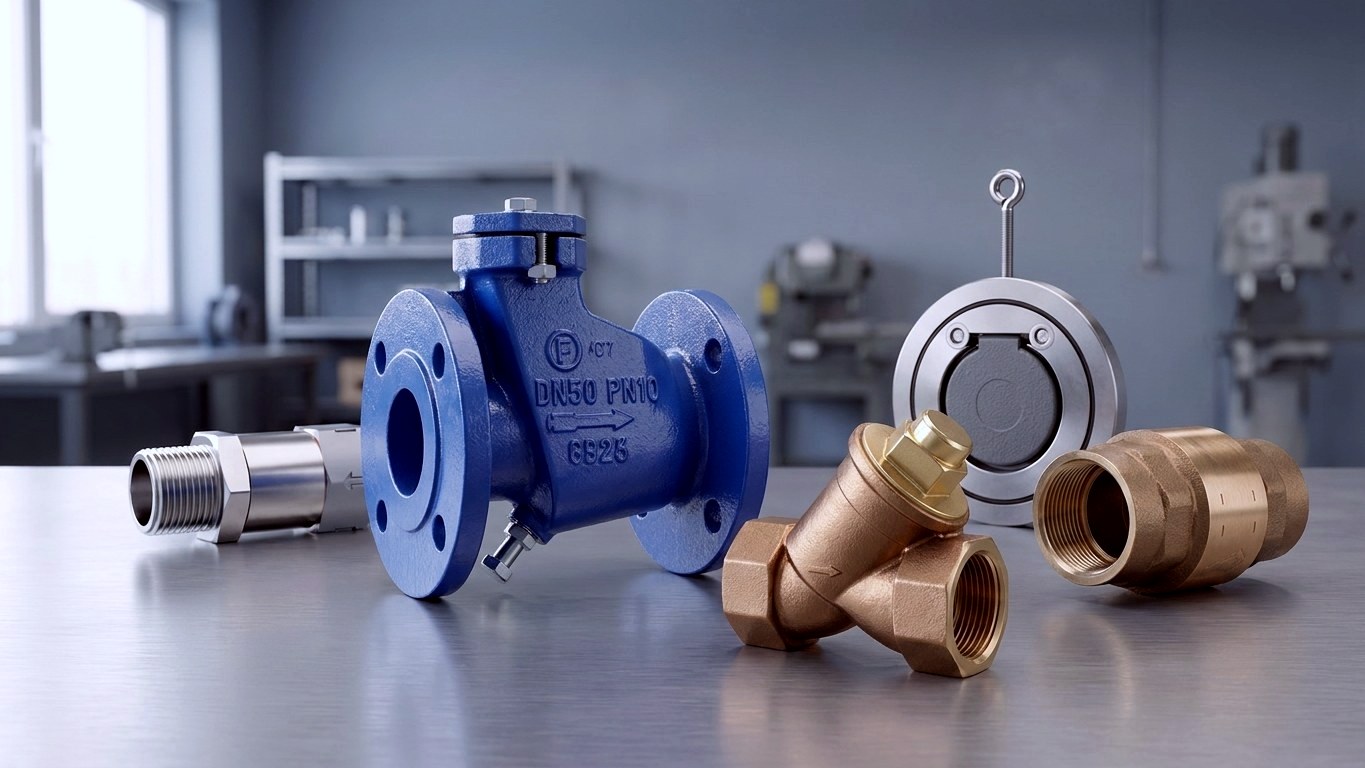
Backflow protection without actuation
Why STASTO
Check valves from a broad product range
Design, nominal size, pressure rating and material determine which check valve fits your pipeline. STASTO covers the common designs and matches them to your application.
Wide Range of Designs
Wafer-type check valves from the CS-2466/CS-2424, CS-6666, CM-2466/CM-2424 and CM-6666 series, valves from the CH010 and CH011 series, as well as dual-plate check valves CH019 and CH020 – a design for every installation situation.
Nominal Size and Pressure Range
PN and ANSI versions, including PN63/PN64, PN100 as well as ANSI 150 and ANSI 600. The specific available nominal size and pressure range varies depending on the series and variant.
Technical Advice on Selection
We match design, material and connection type to your application and, on request, clarify material suitability, pressure rating and availability based on the respective series and variant.
Complementary Valve Range
Axial check valves, swing check valves and matching foot valves from the 110100 and ST304 series, all from a single source – for consistently coordinated piping solutions.
Guide
Understanding design types and choosing correctly
How a check valve works, which design types exist, and which parameters determine the right choice – explained concisely.
Function and design types
- Operating principle
- Forward pressure in the flow direction opens the disc automatically; when flow subsides or reverses, it closes – in many designs spring-assisted – and seals against backflow.
- Wafer check valve
- Installed between two flanges: very short face-to-face length, saving space and weight, ideal for retrofits. Series CS-2466/CS-2424, CS-6666, CM-2466/CM-2424, CM-6666.
- Dual plate check valve (split-disc)
- Two spring-loaded disc halves, fast closing with a short face-to-face length, also suitable for larger nominal sizes. Series CH019 and CH020.
- Flanged design
- Robust design for higher pressure ratings, available in PN64, PN100 and ANSI versions, among others. Series CH010 and CH011.
- Piston check valve
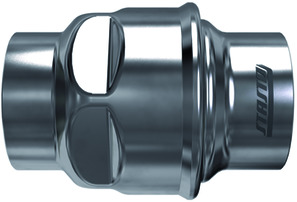
- Axially guided, spring-loaded closing element with smooth, low-noise closing behavior – Series 100000, 100001, 227, 228, 304/CH014-V, 316 and VX23.
- Angle-seat check valve
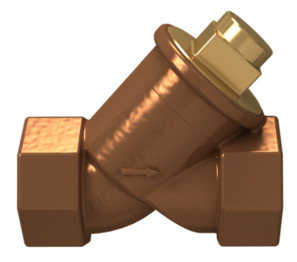
- Angled seat design with low flow resistance for liquid media – Series 1072, 4000 and CH117.
Selection criteria
- Nominal size
- Determines the nominal size, for example DN50, DN100 or DN150; the range covered varies by series.
- Pressure rating
- PN or ANSI rating, such as PN63/PN64, PN100, ANSI 150 or ANSI 600 – depending on series and variant.
- Connection type
- Wafer, flanged or threaded – decisive for installation length and retrofitting into the existing pipe run.
- Media and temperature
- Liquid, gaseous or loaded; refer to the relevant product or variant page for temperature and pressure limits.
- Material and seal
- Housing and seal material must be compatible with the media – for aggressive media, please inquire about material suitability.
- Installation position
- Horizontal or vertical; spring-loaded designs are less position-dependent than purely gravity-closing flap types.
Comparing design types
Wafer, Dual Plate, Axial, or Angle Seat?
The four common check valve designs compared directly – as a guide before selecting the specific series.
| Wafer check valve | Dual plate check valve | Axial check valve | Swing check valve | |
|---|---|---|---|---|
| Series at STASTO | CS-2466/CS-2424, CS-6666, CM-2466/CM-2424, CM-6666 | CH019, CH020 | 100000, 100001, 227, 228, 304/CH014-V, 316, VX23 | 1072, 4000, CH117 |
| Closing element | Disc | Two spring-loaded disc halves | Axially guided, spring-loaded closing element | Closing element on angled seat |
| Face-to-face length | Very short | Short | Compact | Longer, valve-like |
| Nominal size range | Small to large nominal sizes | Up to large nominal sizes, depending on series | Small to medium nominal sizes | Small to medium nominal sizes |
| Typical strength | Space-saving installation, retrofitting | Fast closing with short face-to-face length | Smooth, low-noise closing | Low flow resistance |
| Installation | Between two flanges | Between two flanges | Inserted into the pipeline | Flanged or threaded connection |
Product Range
Check Valves and Non-Return Valves at STASTO
Direct access to the design categories in the STASTO shop – with series, nominal sizes and variants.
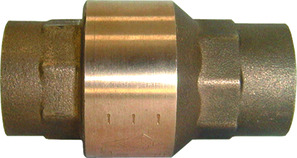
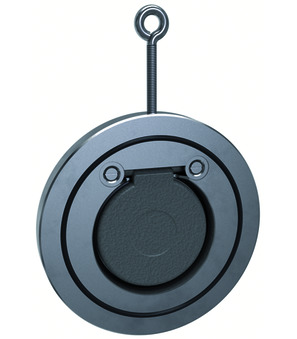
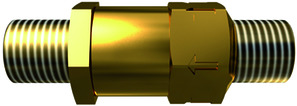
Applications
Where check valves are used
Check valves are used wherever media in pipelines must only flow in one direction. Suitability depends on material, seal and series, and should be verified individually.
Industrial supply lines
Backflow prevention in distribution and ring mains for service water, cooling water or process media. The wafer check valve's short face-to-face length makes retrofitting into existing pipe runs easier.
Water supply and pumping stations
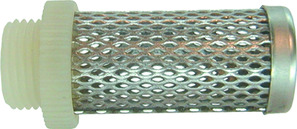
Protects pumps from backflow and pressure surges after shutdown; foot strainers of series 110100 and ST304 additionally safeguard the suction side.
Wastewater and process technology
Backflow prevention in conveying and circulation lines. For heavily loaded media, designs with a wide bore should be preferred.
Heating, cooling and HVAC systems
Prevents gravity circulation and backflow in closed loops – including in vertical pipe sections.
Compressor and Compressed Air Lines
Backflow protection in the discharge line after compressors. Suitability for gaseous media must be confirmed depending on series and seal material.
Chemical and Industrial Processes
For aggressive media with correspondingly resistant materials and seals – we're happy to clarify material suitability upon request.
Availability
Series, Variants and Availability
Nominal size and material range, pressure rating, and availability vary by series and variant. Binding specifications can be found on the respective product or variant page.

Standard versions
Many standard versions of the CS, CM and CH series are available at short notice – the current lead time is shown on the respective variant page.
Special versions
Large nominal sizes, special materials or non-standard seals are clarified together with you upon request.
Pressure ratings and connections
PN and ANSI ratings such as PN63/PN64, PN100, ANSI 150 or ANSI 600 are available depending on series and variant.
Sizing support
On request, we review design, material suitability and pressure rating based on the datasheets of the series in question.
Procedure
Three Steps to the Right Check Valve
From line data to the right series – structured and traceable.
Capture Line Data
Record nominal size, pressure rating, medium, temperature and installation position – these details already significantly narrow down the possible designs.
Choose design type and series
Wafer, dual-plate, or flanged check valve, axial or angle-seat design: select the design type based on face-to-face length, closing behavior, and nominal size, then open the matching series.
Check variant and request a quote
Match material, seal, and connection on the variant page; for special requirements, ask us directly about the sizing.
FAQ
Frequently Asked Questions About Check Valves
Answers on function, design types, and how they differ from other valves.
What is a check valve?
A check valve is a pipeline valve that automatically prevents backflow of the media. It opens under upstream pressure in the flow direction and closes as soon as flow decreases or reverses. This protects pumps, compressors, and downstream system components from backflow and pressure surges – without any external actuation.
What is the difference between a swing check valve and a lift check valve?
Both prevent backflow but differ in their closing element: the swing check valve (butterfly-type check valve) closes with a pivoting disc (or two disc halves), while the lift check valve uses a closing element guided axially or on an angled seat. Swing check valves therefore have a very compact design and are mainly used in larger nominal sizes, while lift check valves offer smooth closing behavior and low flow resistance in smaller to medium-sized lines.
What is the difference between a butterfly valve and a check valve?
A butterfly valve is deliberately actuated – manually or via an actuator – and shuts off the line in both directions. A check valve, on the other hand, operates automatically and only in one direction; it is not a shut-off valve and does not replace a shut-off function.
How does a check valve work?
Upstream pressure in the flow direction automatically opens the valve; when flow decreases or reverses, it closes and seals against backflow. Many designs are spring-assisted, which speeds up closing and makes the valve less dependent on installation orientation. Since no external actuation is required, the function remains intact even during a power outage.
What types of check valves are there?
Common types include the wafer-type check valve, the dual-plate check valve (split-disc), and the flanged design; axial and lift check valves with angled seats are also used. At STASTO, these correspond to the CS-2466/CS-2424, CS-6666, CM-2466/CM-2424, and CM-6666 series (wafer-type), CH019 and CH020 (dual-plate), CH010 and CH011 (flanged), as well as the axial series 227, 228, 304/CH014-V, 316, VX23, 100000, 100001 and the angled-seat series 1072, 4000, and CH117.
What nominal size and pressure rating do I need?
The nominal size and pressure rating depend on the pipeline into which the valve is installed, for example DN50, DN100 or DN150 in a PN or ANSI version. STASTO offers PN and ANSI variants such as PN63/PN64, PN100, ANSI 150 and ANSI 600; the specific nominal sizes and pressure ratings available depend on the series and variant and are listed on the product page.
Which check valve fits stainless steel pipelines?
For stainless steel pipelines, choose a version whose body and sealing material matches the medium and pipeline quality. The available material variants differ by series – for aggressive or hot media, we are happy to advise you on the right material selection.
Can a check valve be installed vertically?
Yes, provided the selected design is approved for the intended installation position. Spring-loaded designs such as the dual-plate check valve or axial check valves are less dependent on orientation than purely gravity-closing valves; the permissible installation position can be found in the specifications of the respective series.
Also relevant
Related valves and accessories
Additional categories related to backflow prevention and pipeline protection.
Next Step
Select a Check Valve or Clarify Your Sizing
Open the design categories in the shop or send us the nominal diameter, pressure rating, and media – we'll match you with the right series.